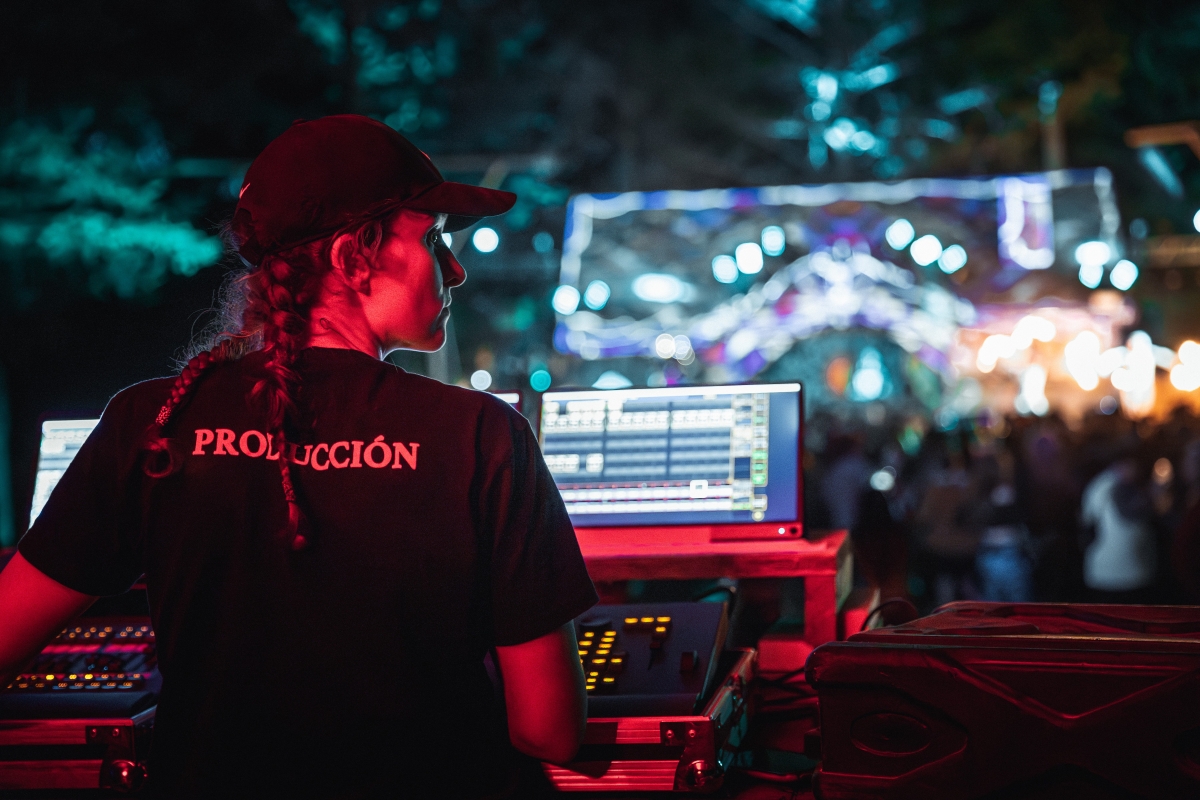
She's designed, programmed, operated, and wrench-turned her way through nearly ten years of live events. She's built a following online doing what most people in this industry do off-camera. And recently, she added "mom" to the list.
In this poignant, funny, and raw interview, Michelle Sparksman, aka Sparky Lights, goes all-in with her adventures in live events, industry perspectives, and how finding humor in the chaos is the best part of the job.
How did you get into the live event production industry?
It all started at the University of Victoria, where I studied theatre design with a focus on sets, costumes, and lighting. By the time I graduated, I wasn't exactly sure where I wanted my degree to take me. I just knew I needed a break from theatre. As much as I enjoyed it, four years was a lot. I moved back to my hometown of Calgary and started working in local theatres while trying to figure out my next step. One day, I worked alongside Mory, who would eventually become a good friend. At the end of the day, he mentioned that a company he worked for was hiring and suggested I apply. That company was PK Sound. I started out manufacturing speakers in the shop. I kept seeing the production crews coming in and out of the warehouse. They were always heading off to concerts and festivals, and I became curious about what they did.
Eventually, I asked the production manager if I could join the next festival as a stagehand. That festival was Shambhala. And that weekend changed everything. Even though I was working as an audio technician, I found myself watching the lighting department whenever I had a spare moment. There was something about it that completely fascinated me. Apparently, I did a good enough job because after that weekend they pulled me out of manufacturing and sent me to the next festival. At that show, I asked if I could spend some time with the Lighting Designer, Chris. He answered every question I had, let me sit behind the backup MA2 at Main Stage, and patiently explained what felt like a completely different language at the time. I had no idea what I was looking at. But I was hooked.
When I got home, I downloaded MA2 and started teaching myself everything I could. I picked up part-time work with local lighting companies so I could learn from experienced programmers and technicians, then bring those skills back to PK whenever an event required lighting support. What started as curiosity turned into a career. Looking back, there wasn't one big moment that got me here. It was a series of small opportunities, generous mentors, and simply asking, "Can I learn more about that?"
Give a piece of advice for someone who wants to be in the industry.
Your first goal shouldn't be becoming a designer, programmer, or department lead. While those are absolutely wonderful goals and a great bigger picture, it is the first goal to become the person people ask for by name. If leads are constantly asking for you because you work hard and make the day easier, the opportunities will grow at a much faster rate. Technical skills can be taught. Reliability is another thing entirely. Your reputation gets you in the door.
What's a favorite show you've been a part of?
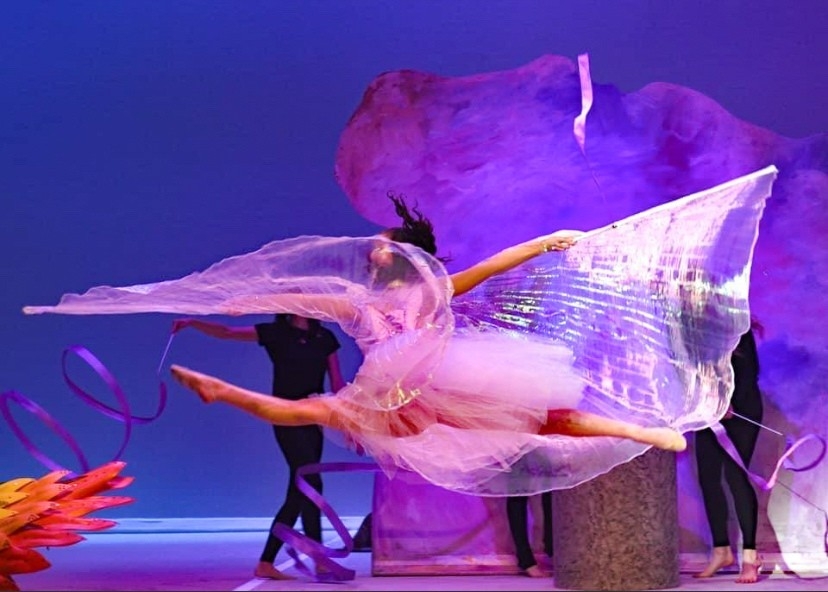
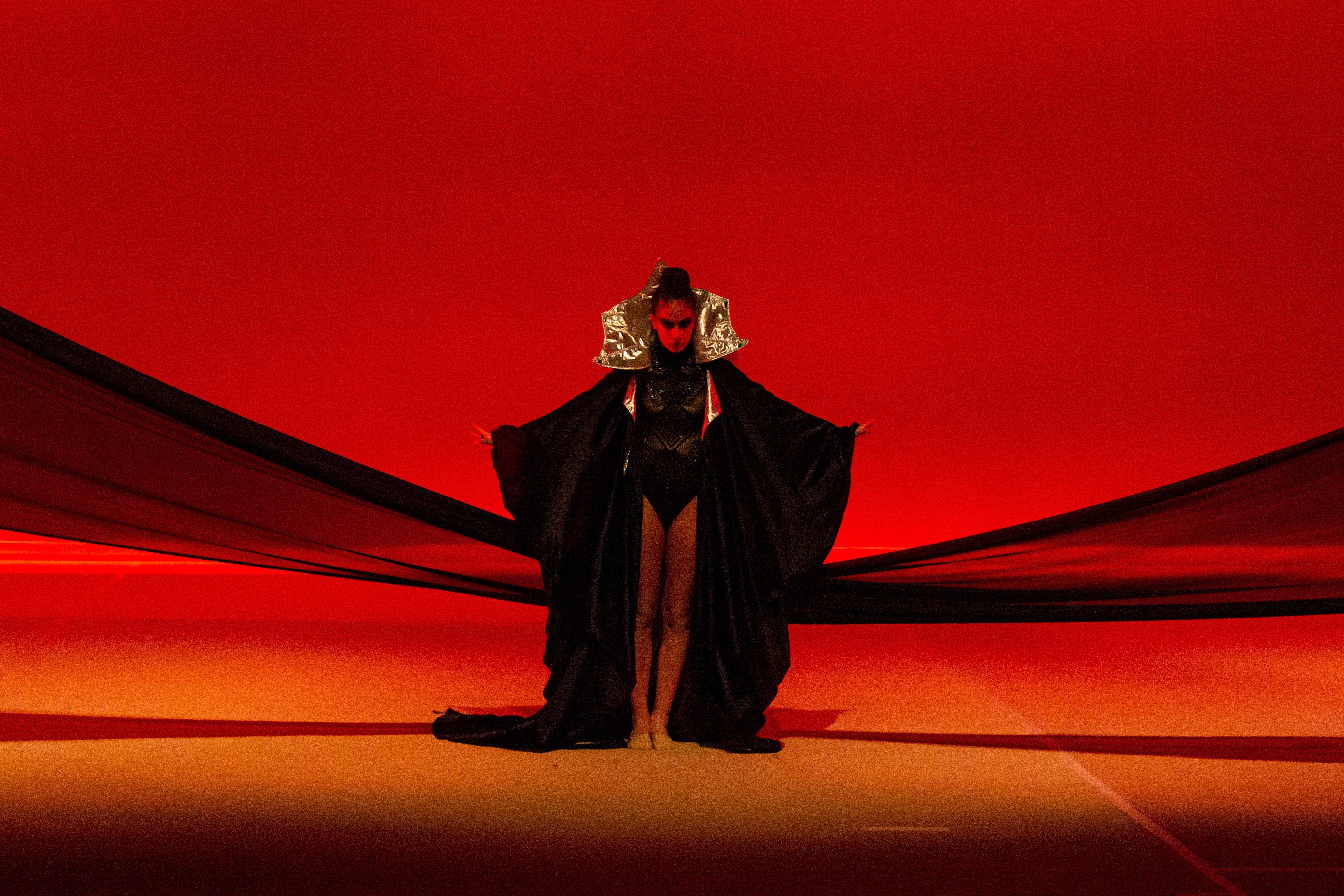
Every year, they put on a community show with rhythmic gymnastic athletes from about 3 to 18 years old, and it always felt very different from the large-scale tours I've worked on. The owner, Camille Martens - an Olympic rhythmic gymnast - is one of the most thoughtful and dedicated people I've met in this industry. You can feel the care she puts into her students and the show immediately. The students were incredibly talented, polite, and genuinely excited to perform.
Even after years of working on major tours and large productions, I still think about that show. The one where everything felt more personal. Where you know the names. Where it felt less like work and more like being part of something together. It reminded me that scale doesn't define impact. Some of the most meaningful shows aren't the biggest ones - they're the ones that make you feel like you belong.
How did your content creator journey begin?
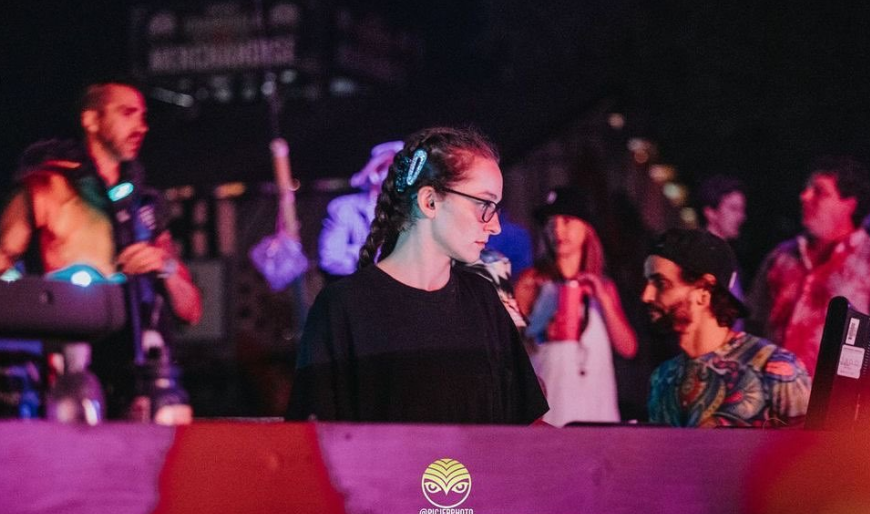
It started with a photographer. I was working a festival when I met a photographer named Jeremy in the crowd. I chased him down and asked if I could get his contact info for some photos for my portfolio. Thankfully, he said yes. A few days later, he sent me my first proper photo working FOH. I was stoked. For the first time, I actually had proof of the work I'd been doing for years. After that, I started asking photographers for their contacts at every event. But they're not always around. So I started taking my own photos and videos. Then reels became popular, and I started posting short clips during downtime on site - just for fun.
Unexpectedly, people started watching. Then more people. Then messages started coming in from technicians, designers, and people outside the industry who connected with it. So I kept going. Not because I had a strategy, and not because I was trying to become a creator - but because it genuinely brought me joy. It became a reminder to not take myself too seriously, to enjoy the work, and to find humor in the chaos of this industry. And what I've learned is this: People don't connect with perfection. They connect with the real moments - the learning, the mistakes, the weirdness, and the people behind it all. What started as documenting my own journey somehow turned into something bigger than I expected.
What's the craziest thing you've experience while working on-site?
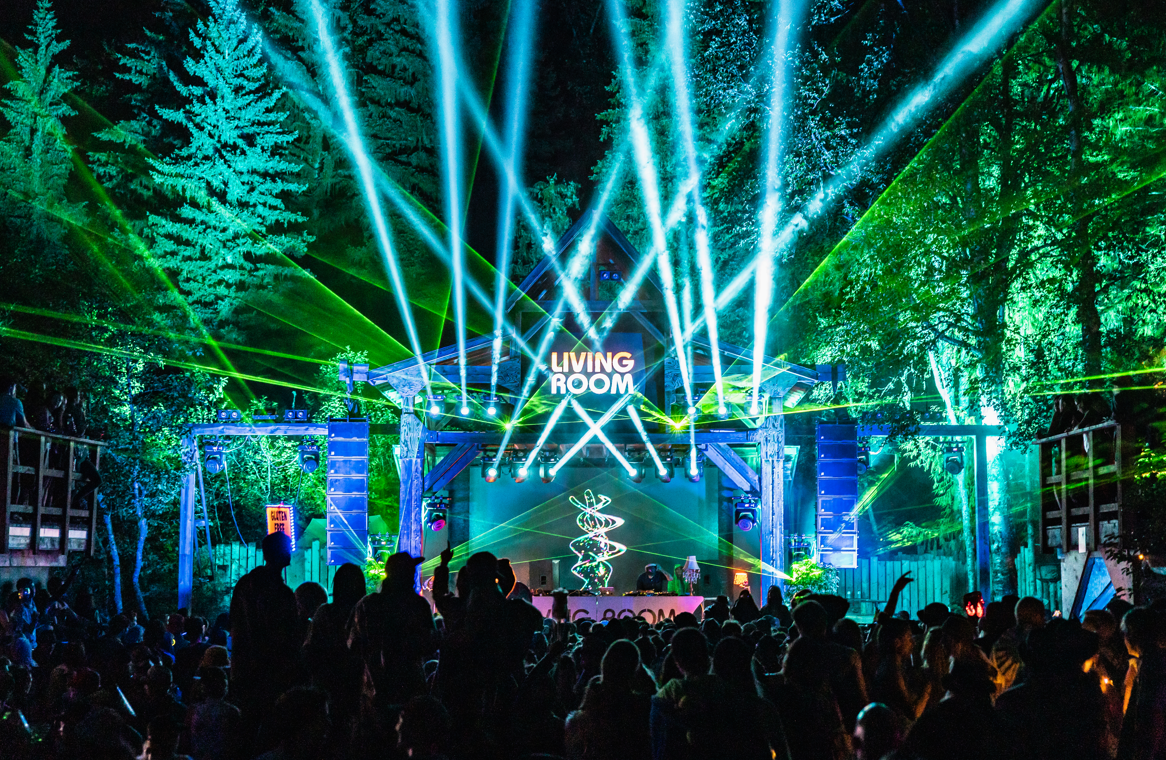
The craziest thing that's ever happened to me somehow involves a console light. I was working at a small festival where FOH was accessed through the VIP lounge. This meant festival-goers could wander behind the technicians, hang out near the consoles, and generally exist far closer to expensive equipment than anyone would recommend. I had my console light on so I could see my buttons. Behind me was a guest who was experiencing an entirely different version of reality than the rest of us. At some point, he became convinced that my console light was staring at him. And apparently it was doing so with an attitude.
The audio and video technicians watched as he began arguing with the light, behind me. They tried to calm him down while we waited for security. Without warning, he launched himself at the console light in an attempt to stop its disrespectful behavior. The problem was that I was positioned directly between him and his true enemy. The next thing I knew, I was face-first into the console with a very aggravated festival-goer on top of me. Thankfully, the rest of the crew pulled him off before any damage was done. And ever since then, I don't regularly turn my console lights on. I don't want to start any more fights.
What are your favorite fixtures of all time?
For small scale I like the Minuit Une IVL Photon. I think they provide a high level of impact for shows that don't have the ability to be large scale. I think that team did a great job in executing what they wanted to with those fixtures.
For large scale events, and this is not a fixture I've ever had the pleasure of seeing in person, the Martin MAC Aura Raven XIP. From what I've seen on video and read about it I think that I would have a fangirl moment if I ever had the opportunity of working with that fixture.
How do you approach working with rental houses?
While I know I'm the client when working with rental houses, I've always tried to approach it with a focus on relationships over transactions. I stay flexible with fixtures and quantities because I understand availability and pricing don't always align perfectly with creative plans. I don't want to be the person trying to extract the lowest possible cost at all times. I know everyone is running a business. What matters more to me is that the experience is good for both sides. If the relationship is strong, solutions tend to appear - sometimes through pricing flexibility, sometimes through adjusting the design slightly to match reality. Either way, the show still gets built. And ideally, everyone wants to work together again. In this industry, repeat relationships matter more than winning a single quote.
How do you keep up with current technology?
The truth is, I don't feel like I do. And I think that's important to acknowledge. Technology in our industry moves incredibly fast. New fixtures, consoles, software, workflows, and techniques are constantly being introduced. Trying to know everything is impossible. What I've noticed is that many people struggle to admit when they don't know something, or haven't had the time to keep up with new skills. But most of what I do know today came from being comfortable saying, "I don't know." Even after years of programming and operating shows, there are still things I'm learning all the time.
Whenever time permits, I make it a habit to ask every Lighting Designer/Programmer I meet: "What's one thing you always program into your show?" And/or "What's a piece of equipment / tool you swear by?" It's one of the most valuable questions I know. More often than not, I walk away with a new busking button I can't live without, a clever macro, a workflow improvement, or an effect I'd never considered before. Other times I walk away with an online cart full of new items I want to buy. The moment you think you've learned everything is usually the moment you stop growing. The best programmers, designers, and technicians I've worked with aren't the ones who know it all. They're the ones who never stop learning. So, I'll ask you: What's one thing you always program into your show? And what's a piece of equipment / tool you swear by?
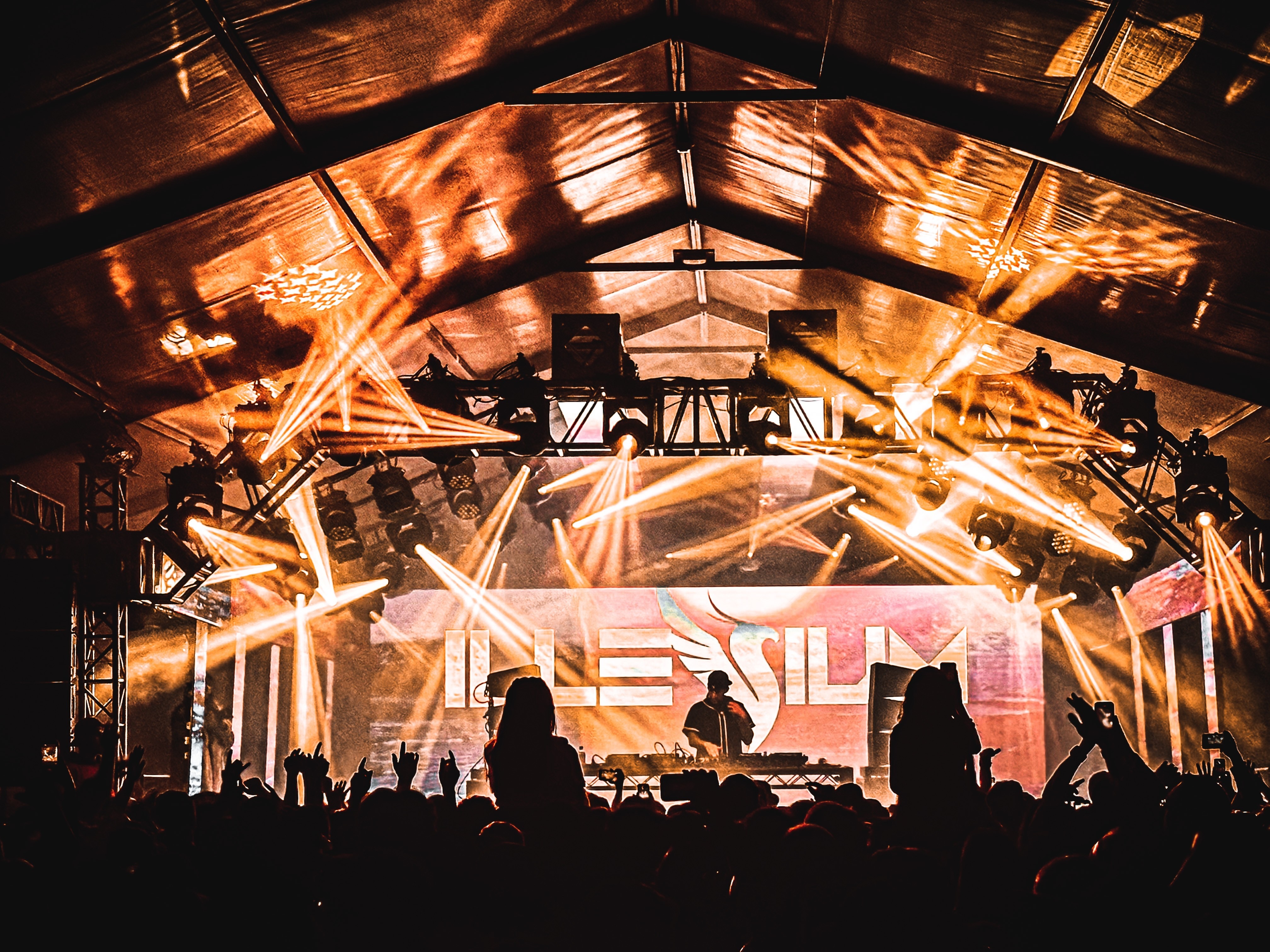
What's a confession you'd like to make?
I will absolutely steal tape if I like it. Not from people. From countries. Different countries seem to have way nicer e-tape and gaff tape than we do in Canada. There is a particular pink e-tape I discovered in a warehouse in England that I still think about. And while we're at it, there was a blue gaff tape in that same shop that was borderline life-changing. The gaff tape is gone. Gone but not forgotten. The pink e-tape, however, has one roll remaining. I refuse to use it. It's too pretty. It's basically a collector's item at this point.
Also, if you've ever worked with me, you know my steel toes occasionally become a mallet when pinning together PRT and my actual mallet has mysteriously disappeared into the void. Which means I need pants that allow a full range of motion for highly professional activities such as kicking staging hardware into place. The general public thinks live event technicians care about moving lights and million-dollar productions. Meanwhile, we're emotionally attached to foreign tape and using our boots as tools.
What do you wish for audio and video crews to know about your role?
Most audio and video teams underestimate how much lighting depends on them. And I don't mean that as a dig - I mean it as a structural reality of how shows are built. Lighting is often treated like the "last department to finish." But in reality, lighting is one of the first departments to be impacted by everyone else's decisions. When rigging changes last minute, lighting doesn't just adjust a trim height - it can mean a full rework of focus, angles, and cue structure. When video walls get bigger, lighting doesn't just "adapt" - entire sightlines disappear and fixture intent changes. When PA moves, front light becomes a geometry problem.
And here's the part people don't always like hearing: Lighting is the only department that relies heavily on precise spatial relationships to function creatively. Audio can tune around a space. Video can scale content. Lighting has to physically live in that space. So when time gets tight - and it always does - lighting is usually the first place where "we'll just make it work" actually means: fewer cues get built, fewer focuses get refined, fewer creative choices survive. Meanwhile, from the outside, it can look like lighting is "taking longer" or "holding things up." But most of the time, lighting is just reacting to a moving target everyone else already passed. The real hot take? The difference between a good show and a great show is rarely talent - it's how early lighting is considered in decisions that affect it. Because once you remove time from lighting, you don't just lose polish. You lose intention.
What's the best piece of swag you've been given?
I know for a fact I haven't been given my best piece of swag yet. It'll be the moment I'm handed a piece of swag with my official logo on it!
Give us your industry hot take.
Hot Take: Too many people confuse being difficult with being experienced. I've worked with a lot of incredibly talented people throughout my career. Some of the best technicians, designers, programmers, and department heads I've ever met were also some of the calmest people on site. They didn't need to raise their voice. They didn't need everyone to know they were the smartest person in the room. They didn't need to remind people how many years they'd been doing this. Their work and attitude spoke for itself.
On the flip side, I've occasionally met people who seem to believe that experience is measured by how frustrated they are, how many people they can intimidate, or how loudly they can announce that everyone else is doing it wrong. Somewhere along the way, parts of our industry started romanticizing that behavior. The grumpy veteran. The technician who yells at everyone. The person who makes newer crew members afraid to ask questions. The individual who treats patience like weakness. But being difficult isn't the same thing as being knowledgeable. Being intimidating isn't the same thing as being respected. And being the loudest person on site doesn't automatically make you the most experienced. In fact, some of the most knowledgeable people I've ever worked with are also the most approachable. They answer questions. They teach. They stay calm when things go wrong. They understand that everyone starts somewhere. Because real experience gives you confidence. And confidence doesn't need to shout.
If you had an unlimited budget, what event/show/artist would you design for?
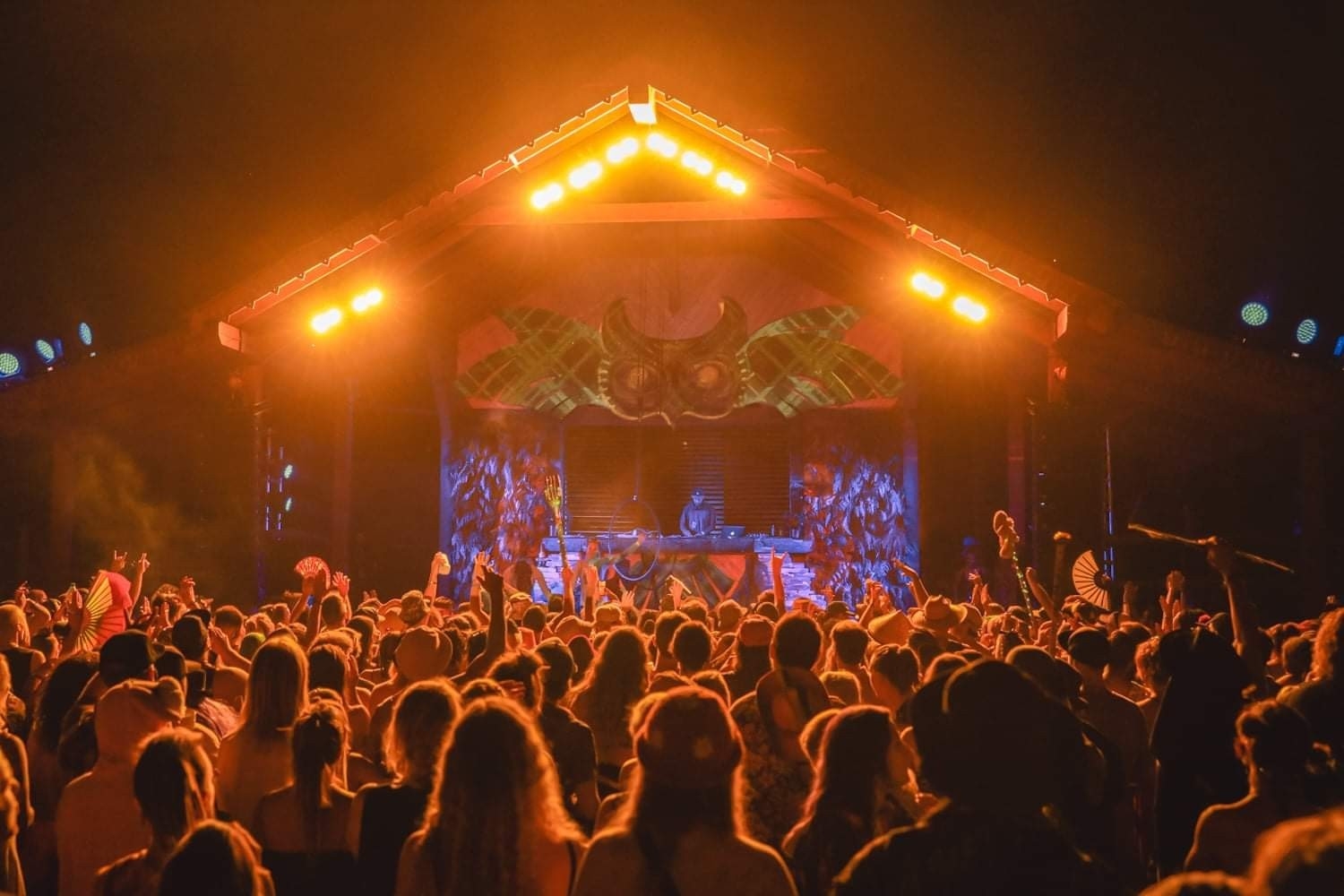
I think ultimately, I would create a festival of my own. Any other event, though the budget is unlimited, there are still a bunch of people I am working with to create a vision that is not solely my own. I would create my perfect event and then hire all the people I have enjoyed working with or always wanted to work with. Pick my favorite artists to come do a set and have the tech lounge be nicer than the VIP lounges!
What would be on your hospitality rider?
I'm a big advocate for healthy food options in the live events industry. Don't get me wrong - I love snacks like any other tech, I'm currently trying to eat all the weird Oreo flavours - but long days, overnight load-ins, and festival weekends don't run well on caffeine and convenience alone. For me, it's about having a solid foundation: fresh fruit and vegetables, hearty good meals over burgers and fries, a good local coffee, and the local favourite snacks. If I can, I'll always ask for something local. One of the best parts of this job is getting to experience different cities, not just the shows in them. Only rule: I'm vegan.
Give your younger self one piece of advice.
Stop worrying so much about where you're going. At 22, I thought I needed to have a plan. I thought I knew what success was supposed to look like. Most of the opportunities that shaped my career came from places I never expected. I didn't go to university thinking I'd end up programming lights for concerts and festivals. I simply stayed curious. I asked questions. I said yes to opportunities. I paid attention to the people who knew more than me. And when I found something that excited me, I chased it. You don't need to have everything figured out. Some of the best things that will happen in your life haven't even appeared on your radar yet. Keep putting yourself in rooms with people who inspire you. You never know which small decision will end up changing the entire direction of your life.
Follow Michelle on Instagram at @sparky.lights for industry content and more!