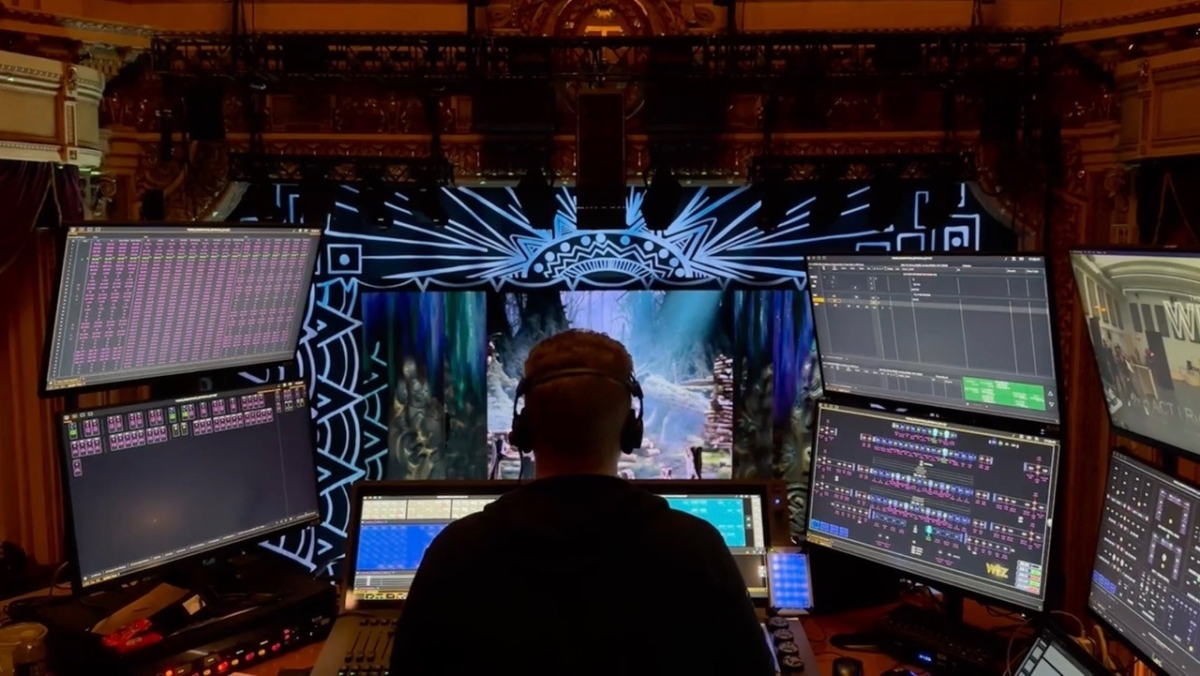
The Wiz, Lighting Design by Ryan J. O'Gara
TLDR;
How do you become a moving light programmer? Broadway moving light programmer Jonah Camiel describes the role as translating a designer's ideas into repeatable, reliable data under time pressure. He recommends shadowing working programmers during tech, asking "why" questions during breaks, and attending meals with the team to build relationships. Practice should be intentional - focus systems, match color across fixture types, build chases, and time yourself. There is no assistant programmer position; the first job comes through trust built on small shows. The article is the first in the series "Between the Console and the Clock."
Tech moves fast. Faster than most people expect.
The show is changing by the minute. The designer is calling ideas as quickly as they can think them. You're listening, anticipating the next adjustment, updating cues, and trying to stay organized enough that nothing slips through the cracks. Every adjustment matters. The goal is simple: keep the creative process moving.
You glance at the console clock. What felt like ten minutes since the cast walked onstage has been a full hour.
That's life as a moving light programmer.
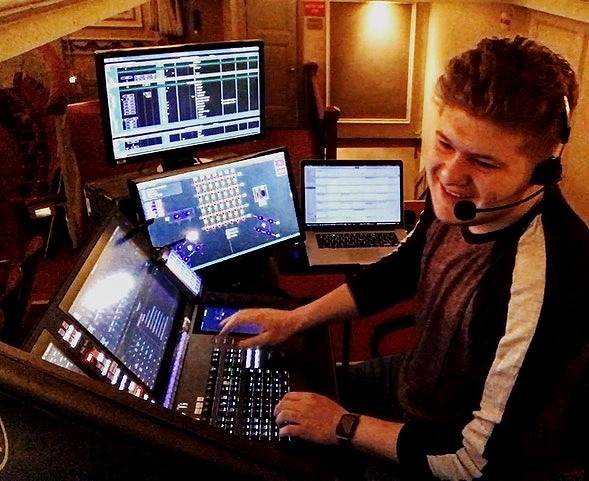
My name is Jonah Camiel. I've been working as a moving light programmer across Broadway, television, cruise ships, and live events since 2017. I've been asked to write a bit about what it's really like to do this job.
I could use this space to talk about favorite macros, or how to build some of the most commonly requested effects. That information is useful, but it's also pretty easy to find. What I think is harder to come by is an honest look at how to set yourself up for success, how to keep improving, and how to survive and continue to grow once you're actually in the room.
That's what this series is about. Not just how to become a moving light programmer, but how to keep learning, keep getting better, and keep getting hired.
A job that's often misunderstood
The role of a moving light programmer is one of the least understood - and least taught - roles in the design world.
Part of that is because the days are long and packed. Checkout. Pre-cueing. Tech. Production meetings. Notes. Revisions. Repeat. From the outside, it can be hard to tell what we're actually doing all day.
More importantly, it's often misunderstood what the job really is.
A programmer is more than a light board operator. A moving light programmer is part of the design team.
Your job is to translate a designer's ideas into repeatable, reliable data. You do it fast, but you also have to do it in an organized and methodical way. The goal isn't just speed. It's clarity. It's staying ahead of the room. It's building a system that supports the design, even as it changes.
Speed comes with time. Eventually, the keystrokes turn into muscle memory. When that happens, your attention can shift to the things that actually matter.
How can I support the storytelling?
How can I reduce friction in the room?
How can I help the designer stay focused on creative choices instead of technical hurdles?
That's where the real work is.
"How do I even learn this?"
This is usually the first question. And honestly, it's a fair one.
A lot of us didn't have formal training opportunities. There were no moving light programming courses offered at my university. I didn't even know how to start.
My best recommendation is simple: shadow.
Shadow anyone and everyone who will let you. That advice applies to almost every design role, but it's especially important here. You want to see how other programmers work in real rooms, under real pressure.
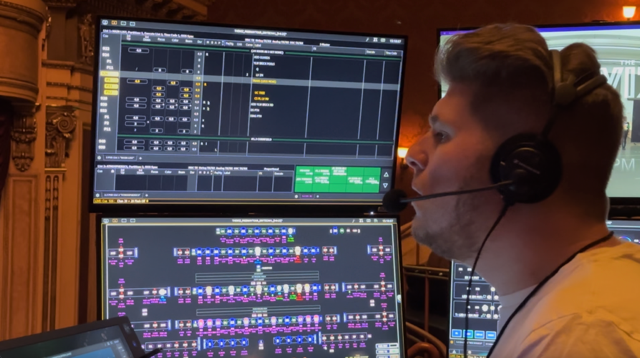
This is how I got started. I reached out to programmers who I admired and asked if I could sit behind them during tech. I was lucky that some incredibly generous people said yes.
Watching a real programmer in action is invaluable. You're not just learning how they program - you're learning how a professional tech actually runs.
Take notes on what you don't understand. Pay attention to pacing, naming, revision habits, and how they respond when things change. Study the decision-making, not the button presses.
During breaks, ask better questions.
Not "what does that feature do?" - you can look that up.
Ask why they stored focus and beam data but not color.
Ask why they chose an absolute effect instead of a linear one.
Those answers are where the job really lives.
Getting in the room
Getting these opportunities can be a lot easier said than done.
Cold-emailing worked for me, but it's not the only way. Start with the rooms you're already in. Does anyone there program? Do they know someone who does?
If you're not in New York, keep an eye on regional theaters hosting Broadway tryouts. A lot of complex productions are happening outside the city now, and they often bring New York-based designers and programmers with them.
When you do connect with someone, ask politely if you can shadow for a day. Be respectful. Show up on time. Don't interrupt. Save your questions for breaks.
Another big piece of advice: go to meals with the team.
In this industry, meals matter. Lunch and dinner are where relationships get built. I've had plenty of people shadow me for a full day, only to disappear during the meal break. That's a missed opportunity.
Practicing with intention
Once you know what you don't know, it's time to start learning it.
Lucky for us, this has never been more accessible. Most modern consoles have built-in visualizers, and seeing the result of your keystrokes is fundamental.
But don't just open offline software and mess around.
Set goals.
Focus a sidelight system and record it into presets.
Practice matching color across different fixture types.
Build chases that can run in multiple directions, across multiple different fixture types.
These are real, day-to-day skills.
As you improve, start timing yourself. Pay attention to accuracy as much as speed. Drill like it's a sport. If something slows you down, isolate it. Practice it on its own. Or build a macro if it makes sense.
Practice should feel like tech, not just experimentation.
Think ahead. How will you turn on work lights during a break? Will atmospherics live in a separate cue list? Build it. Test it. Make sure it fires the way you expect.
When your speed and organization feel solid, it's time to try it in the room.
The first job is the hardest
One thing that doesn't get talked about much is getting your first programming job.
There's no assistant programmer position. No internship. One day you haven't done it, and the next day you have.
That's scary for designers too, especially on smaller shows. They're trusting you with their ideas and their data.
Mistakes will happen. What matters is how you respond.
Be honest. Own what went wrong. Learn from it and move forward. That's how trust gets built. That's how more opportunities will present themselves to you.
Taking the work - and listening
Repetition is your friend. The more shows you program, the more you learn.
Early on, take anything you can reasonably afford to take. The money comes later. Smaller shows are where you really learn how to listen - and listening is one of the most important skills a programmer can have.
You can't build a look if you don't understand what the look is supposed to do.
Every designer speaks a slightly different language. Working with a lot of different designers early on helps you build a stronger vocabulary and better instincts.
There's always more to learn
This isn't an easy job to learn. And I've only covered the basics of what can help you start the journey of becoming a moving light programmer.
Having the skills to transform ideas into data is an important aspect of the job. Being a good collaborator, good at reading the room, and good at managing your business is just as important.
None of that happens overnight.
Be patient with yourself. This work takes years. I'm still learning too.
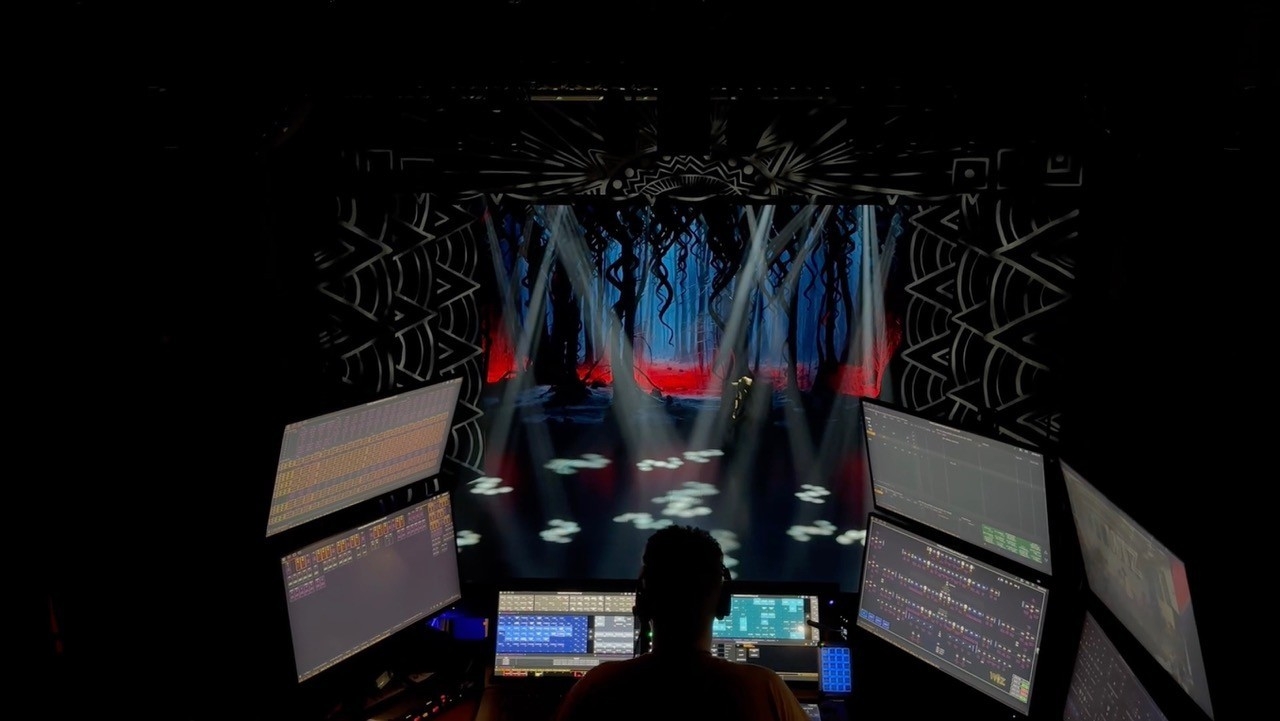
The Wiz, Lighting Design by Ryan J. O'Gara
_____________________________________________________
This is the first entry in a new series, Between the Console and the Clock. We'll cover topics not typically discussed about working as a Moving Light Programmer to help demystify this important role. DM Jonah on Instagram @jonahcamiel with any topics you're interested in hearing more about!
Jonah Camiel is a Brooklyn based Moving Light Programmer originally from Boston, Massachusetts. He is a graduate of the production and design program for stage and screen at Pace University. Selected Broadway: The Wiz, Peter Pan Goes Wrong, Into the Woods, POTUS, Thoughts of a Colored Man. Selected National Tours: The Wiz, Mystic Pizza, Clue, Come From Away, Into the Woods, Ain't Too Proud. Other notable projects: Broadway Bares, Norwegian Cruise Lines, Virgin Voyages, CNN Studios, Food Network Studios, PGA Tour Studios, Love Island USA Reunion. www.jonahcamiel.com