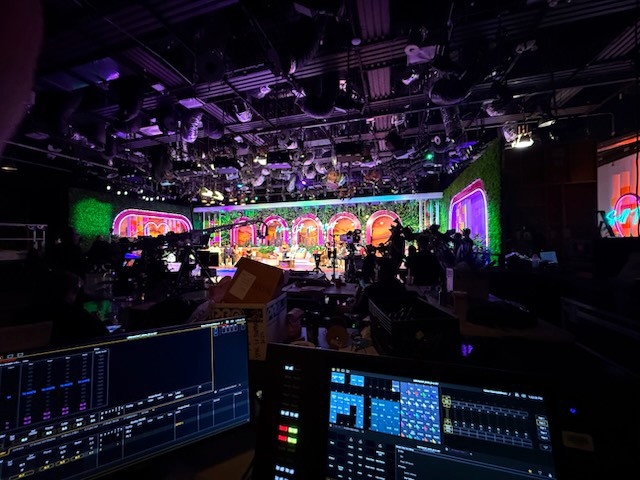
TLDR;
How do commercial technical rehearsals actually work? Jonah Camiel's third entry in his "Between the Console and the Clock" series argues that great moving light programming is really about judgment, not speed at the console.
How Commercial Technical Rehearsals Actually Work
And why good judgment matters more than speed.
There aren't many rooms more expensive than a commercial technical rehearsal.
Whether it's a Broadway musical, a television special, a concert tour, a corporate event, or a cruise ship production, dozens-sometimes hundreds-of people are on the clock at the same time.
The performers are waiting.
The director is waiting.
The producers are waiting.
Every department is trying to move the production forward together.
Every minute costs money.
That doesn't mean the room should feel rushed. In fact, the best technical rehearsals I've been part of have felt surprisingly calm. Everyone understands their role. Communication is clear. Problems get solved quickly. The room keeps moving.
That's really what a commercial technical rehearsal is.
It's not about programming cues.
It's about making the best possible use of everyone's time.
As programmers, that's one of our biggest responsibilities.
The habits we talked about in the last article-organization, thinking in systems, building speed, and maintaining a clean file-aren't just good programming habits. They're the foundation that allows everyone else to do their jobs.
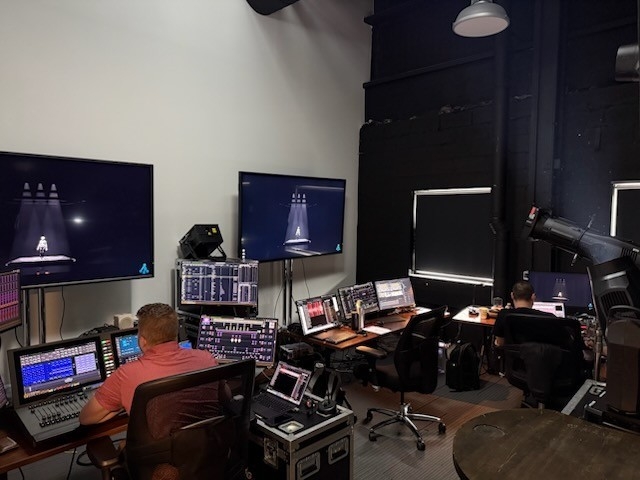
Most of the work happens before rehearsal begins
People often picture technical rehearsal as the moment when all of the programming happens.
In reality, the goal is to do as much work as possible before the room becomes expensive.
On a Broadway production, a typical day might begin around 8:00 or 9:00 in the morning with department work. The cast may not arrive until after lunch. Television, concerts, corporate events, and themed entertainment all have different schedules, but the philosophy is the same: use every opportunity to prepare before talent, clients, or stakeholders are in the room.
Those morning hours are some of the most valuable of the day because they're when we get ahead.
We already know which scenes we'll probably be rehearsing. We know which scenic units are coming onstage. We know which lighting systems we'll likely need. We can't build every cue before rehearsal begins, but we can build the framework.
We'll rough in cue structures, choose preliminary colors, establish timings, organize systems, build effects, and prepare palettes so that once performers arrive we're refining instead of inventing.
One thing teams I've worked with often do is rough in the first cue of every scenic location before rehearsal begins. It may not end up being the final look, but it gives us a starting point instead of a blank stage.
By the time rehearsal begins, your file should be ready to support creative decisions-not slow them down.
Preparation doesn't just make you faster at the console. It changes the conversations you have during rehearsal. Instead of asking, "How do we build this?" the conversation becomes, "Is this the right creative choice?"
That's a much better use of everyone's time.
Preparation gets you to rehearsal.
Good communication is what keeps it moving.
Communication keeps the room moving
As a programmer, one of the most valuable things you contribute isn't just speed at the console-it's efficient communication.
Every misunderstanding has a cost.
If you assume what the designer meant and program the wrong idea, you've spent valuable time building something that now has to be undone. The designer has to restate the note, stage management has to wait, and every other department is sitting idle while lighting catches up.
Those delays add up.
That's why experienced programmers ask questions when something isn't clear.
A director might say,
"Can we make this moment feel more intimate?"
The lighting designer interprets that idea and translates it into something actionable.
"Let's bring the sidelight down, add a tighter special, soften the background, and let's revisit the transition afterward."
Your responsibility is to execute that idea accurately the first time. If part of the note isn't clear, ask.
A thirty-second conversation is almost always faster than spending three minutes programming the wrong thing.
Communication also means knowing when not to interrupt.
If the designer and director are deep in conversation about a difficult moment, let that conversation play out. Listen carefully. Prepare what you can. Wait until there's an appropriate moment to ask your question.
Sometimes the fastest thing you can do is stay quiet.
As you work with the same designer over multiple productions, you'll begin to recognize how they think. You'll learn the kinds of notes they tend to give, the way they talk about color, movement, and composition, and the questions they almost always ask.
That familiarity doesn't mean making creative decisions for them. It simply means you can prepare more effectively. You may already have the palettes open they're about to request or have the next lighting system ready because you've learned how they typically build a scene.
Those moments of anticipation aren't built on assumption.
They're built on trust.
Learn when to stop the room
One of the hardest instincts to develop is knowing when to ask everyone to wait.
Sometimes it's absolutely the right decision.
If a cue is fundamentally broken, if a lighting system isn't behaving correctly, or if continuing would only create more confusion later, it's worth taking a minute to solve the problem properly.
Other times, the better decision is to keep moving.
Maybe a transition needs to be rebuilt. Maybe a complicated effect deserves more attention than the schedule allows in that moment.
Take the note.
Write it down.
Keep rehearsal moving.
Then solve it during the next break or before rehearsal starts the following morning.
Commercial technical rehearsals are often an exercise in triage.
One question I ask myself constantly is:
"Do I need the talent to get this right?"
If the answer is yes, we probably need to stop and solve it now.
If the answer is no, there's a good chance it can wait until tomorrow morning.
That question has become one of the simplest ways I decide whether something needs to happen immediately or later. It has helped me save hours of rehearsal time for productions over the years.
You're constantly deciding what has to happen now and what simply has to happen before opening.
Learning that difference takes experience.
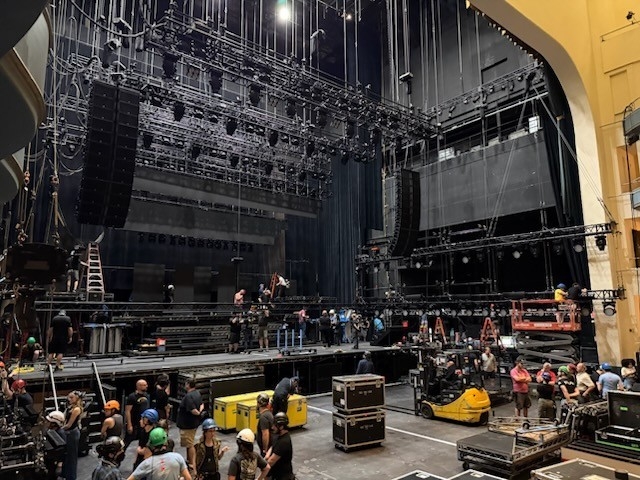
Rely on the team around you
One mistake newer programmers sometimes make is trying to solve every problem themselves.
Commercial productions aren't built that way.
They're collaborative by design.
Your Associate Lighting Designer or Lighting Director is often your greatest resource. While the designer is focused on the creative conversation and you're focused on programming, they're tracking notes, communicating with other departments, prioritizing work, dispatching electricians, and watching for details that neither you nor the designer have time to catch.
Likewise, your electricians become your hands on the rig. If a fixture goes down, they can often begin troubleshooting before you've even had a chance to think about what might be wrong.
Trust them.
Use them.
The same goes for every department around you.
Commercial productions work because everyone understands their role while supporting everyone else's. The programmer doesn't climb the ladder to fix a fixture. The electrician doesn't decide the creative note. Everyone contributes where they can have the greatest impact.
You don't earn respect by carrying every problem yourself.
You earn it by knowing when to involve the right people.
The larger the production becomes, the more important that skill becomes.
Stay one step ahead
Experienced programmers always seem to have the next thing ready before it's asked for.
That isn't because they can predict the future.
It's because they've learned to recognize patterns-and they've learned to pay attention to everything happening around the room.
One of the most valuable habits you can develop is keeping an ear on conversations that don't directly involve you.
What is stage management talking about?
What note is the director giving?
Is automation setting up for a scene change?
Is audio troubleshooting a microphone?
As a programmer, you're constantly asking yourself one question:
"What's the priority right now, and how can I help move the room forward?"
The answer isn't always lighting.
If the room is waiting on a difficult quick change rehearsal, that's a great opportunity to quietly work through your notes, clean up cue timing, organize palettes, or finish something you've been putting off.
Other times, the room may be focused on an illusion, an automation sequence, or a complicated video cue. Lighting may not be driving the conversation, but it's still a critical supporting player. Your job is to understand what that department needs from you and make sure lighting supports the moment instead of competing for it.
There will also be times when lighting is the priority. Maybe the designer is refining a complicated transition, or you've just moved into a new scenic environment. That's when you should already have the focus palettes open, the appropriate systems ready, and the tools you'll likely need close at hand.
Experienced programmers don't just anticipate lighting notes.
They anticipate the needs of the room.
Sometimes that means preparing the next lighting system before it's requested.
Sometimes it means using five unexpected minutes to build a focus palette you'll likely need twenty minutes from now.
Sometimes it means simply staying quiet while another department solves the problem in front of them.
It's about understanding the rhythm of the rehearsal well enough that you're always contributing to whatever moves the production forward.
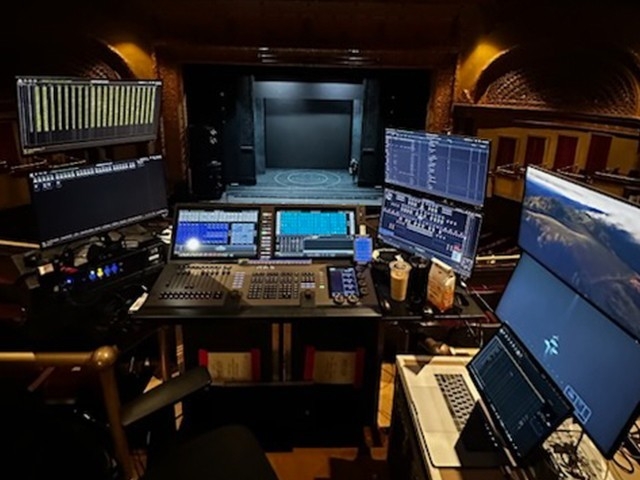
Know when to take a back seat
One lesson took me a long time to appreciate is that not every moment needs your input.
Sometimes the designer and director are working through a difficult storytelling problem. They may spend ten minutes discussing an idea that ultimately doesn't work. They may ask to see three different versions before returning to the first one.
From the outside, it can look inefficient.
It isn't.
Those ten minutes weren't wasted.
They were the work.
Sometimes people need to see an idea before they know it isn't the right one.
Your job isn't to eliminate that exploration.
Your job is to make exploring ideas as inexpensive as possible.
Build the ideas they're asking to see. Stay engaged, listen carefully, and be ready for the next adjustment.
One habit I've picked up over the years is to avoid throwing work away too quickly. Just because the designer says, "Let's move on," doesn't necessarily mean they're done with that idea.
Design is rarely a straight line.
A look that doesn't work in one moment may become exactly the right solution later in the day after other pieces have changed. If you've preserved that work, returning to it takes seconds instead of rebuilding it from scratch.
Sometimes people need to compare two ideas side by side before they know which one is right.
A smart programmer doesn't just build cues.
They preserve options.
Your job is to remove friction
In my opinion, the best programmers rarely look rushed.
Not because they have less work to do.
Because they've removed as much friction from their own process as possible.
Their files are organized.
Their systems are ready.
Communication is clear.
The lighting team works together.
They always know what the next priority is.
They keep a running notes list so that when five unexpected minutes appear, they already know how to use them.
That's ultimately what makes someone valuable in a commercial technical rehearsal.
Your real value isn't measured by how quickly you can press buttons. It's measured by how much time you give back to the creative team.
Every organized file.
Every clear question.
Every note you save for later.
Every idea you preserve.
Every moment you recognize the room's priorities before your own.
Those are the decisions that keep a commercial technical rehearsal moving.
Over the years, I've realized that programming has very little to do with pressing buttons.
It's about judgment.
Good judgment is knowing when to ask a question and when to stay quiet.
Knowing when to stop the room and when to write a note for tomorrow morning.
Knowing when lighting is the priority-and when another department needs the room more than you do.
The best programmers aren't simply the fastest people behind the console.
They're the ones who consistently make the right decision at the right moment.
This is the third entry in the series, Between the Console and the Clock. We cover topics not typically discussed about working as a Moving Light Programmer to help demystify this important role. DM Jonah on Instagram @jonahcamiel with any topics you're interested in hearing more about! See the entire Between the Console and the Clock Series here.
Jonah Camiel is a Brooklyn based Moving Light Programmer originally from Boston, Massachusetts. He is a graduate of the production and design program for stage and screen at Pace University. Selected Broadway: Beaches, Every Brilliant Thing, The Wiz, Peter Pan Goes Wrong, Into the Woods, POTUS, Thoughts of a Colored Man. Selected National Tours: The Wiz, Mystic Pizza, Clue, Come From Away, Into the Woods, Ain't Too Proud. Other notable projects: Broadway Bares, Norwegian Cruise Lines, Virgin Voyages, CNN Studios, Food Network Studios, PGA Tour Studios, Love Island USA Reunion. www.jonahcamiel.com